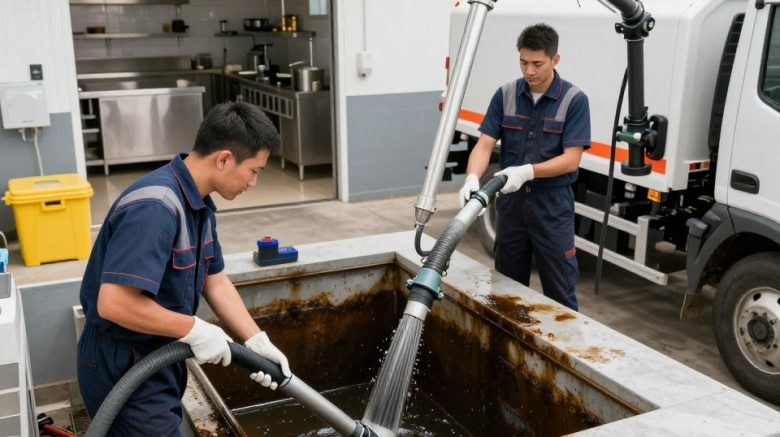
Have you ever wondered about what can happen when grease trap cleaning gets put off in a high-traffic commercial kitchen? It’s not only about keeping things clean; it’s about keeping a grease trap pumping system running efficiently. These traps are vital for capturing fats, oils, and grease (FOG) before they can harm plumbing and sewer systems. By prioritizing regular maintenance, you safeguard your restaurant’s infrastructure and prevent costly plumbing problems and odors.
Related information about grease cleaning and pumping

The resource about grease cleaning and pumping

Documentation about grease cleaning and pumping
Grease traps play a major role in maintaining efficiency and cleanliness in commercial kitchens. They play a vital role in ensuring operational success and compliance with local laws. When owners understand grease traps and the impact of neglect, it becomes easier to make smart choices about restaurant grease interceptor cleaning.
Role Of Grease Traps In Commercial Kitchens
Grease traps are typically placed near dishwashing areas to capture fats, oils, and grease (FOG) before they enter the sewer. This is important for stopping contamination and safeguarding wastewater infrastructure. Consistent grease trap maintenance keeps these devices working properly and protects both the environment and the business from fines or interruptions. Regular checks are key to following grease trap regulations, which set out cleaning and maintenance schedules.
What Happens When Grease Trap Cleaning Is Neglected
Failing to maintain grease traps can create serious issues for kitchen operations and public health. Some possible outcomes include:
- Major sewer backups that trigger costly emergency repairs.
- Unpleasant odors in the kitchen and dining areas, lowering customer satisfaction.
- Fines and legal trouble due to violations of grease trap regulations.
- Increased risk of plumbing problems, which could stop kitchen operations.
A consistent cleaning plan—such as restaurant grease interceptor cleaning—helps prevent these problems. Ongoing upkeep helps maintain compliance and keeps the kitchen environment safe and functional.
Kitchen Grease Trap Cleaning: A Practical Step-By-Step Guide
Cleaning a grease trap is crucial for a kitchen’s efficiency. You’ll need proper tools and a step-by-step process. From collecting necessary supplies to disposing of waste correctly, each step is vital for a clean, functional kitchen.
DIY Cleaning Tools You’ll Need
Before you begin, make sure you have these tools at hand:
- Heavy-duty rubber gloves
- Gas mask or respirator
- Crowbar or sturdy wrench
- Scraping tools
- Shop vacuum
Step-By-Step Grease Trap Cleaning Process
Follow this detailed process to clean effectively:
- Open the grease trap by lifting the lid carefully.
- Remove the waste, aiming to take out as much as you can.
- Vacuum out leftover bits with a wet/dry shop vacuum.
- Wash the interior with mild detergent.
- Rinse thoroughly with clean water to remove debris.
Tips For Proper Disposal Of FOG Waste
Proper disposal of FOG waste is essential for environmental safety:
- For small quantities, dispose using double-lined trash bags.
- For larger volumes, use grease recycling services to comply with local laws.
| Waste Quantity | Disposal Method | Recommended Services |
|---|---|---|
| Under 5 liters | Double-bagged garbage bags | Approved local landfill |
| Over 5 liters | Professional waste disposal | Grease recycling services |
Using an enzyme grease trap treatment can boost your cleaning efforts, naturally breaking down fats and oils. By adhering to these steps, you’ll keep your kitchen clean and meet waste disposal standards.
How To Know Your Grease Trap Needs Cleaning
Keeping your grease trap in top shape is vital for your commercial kitchen’s smooth operation. Recognizing when to schedule cleaning helps you avoid problems down the road. Several signs can alert you to the need for an inspection.
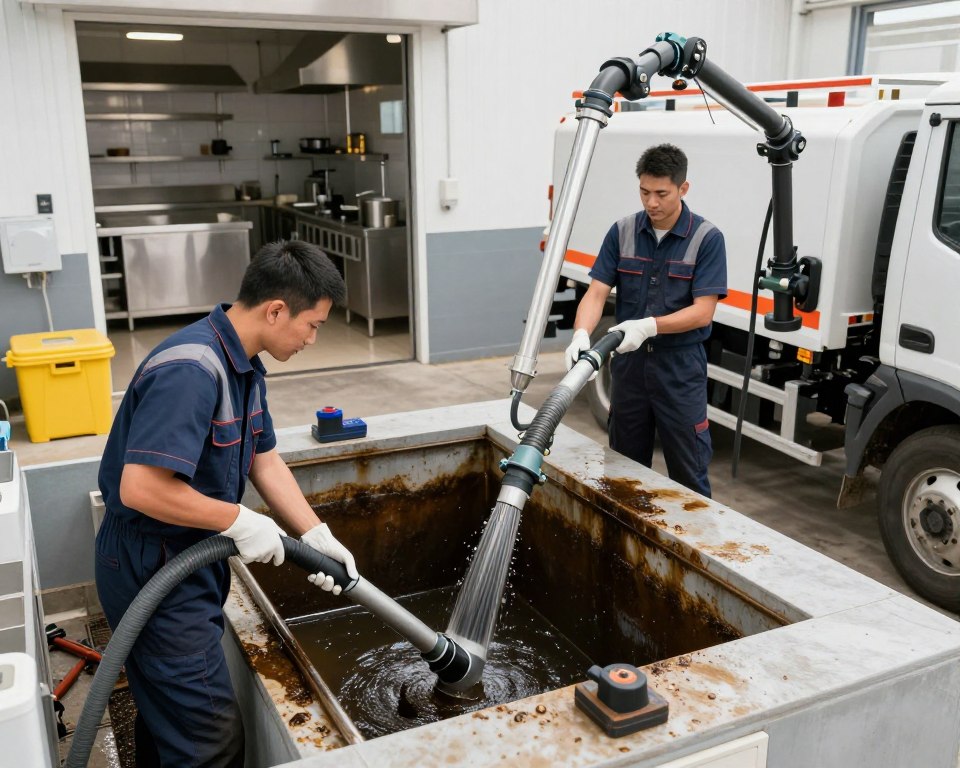
Common Signs Of Grease Buildup
Keep an eye out for these indicators that your grease trap needs prompt service:
- Bad odors coming from drains or kitchen areas.
- Slow sink drainage that often points to grease buildup and blockages.
- Visible grease accumulation in and around your drains.
- Repeated plumbing problems like clogs or backups.
How Often Should Cleaning Be Done?
Routine grease trap maintenance is important for efficiency and regulatory compliance. In many cases, inspections and cleanings are recommended every four to six weeks. High-use kitchens may require more frequent service. Using a professional service for regular upkeep helps ensure you meet standards and keep the kitchen clean.
| Kitchen Type | Recommended Cleaning Frequency |
|---|---|
| Light Usage | Every 4-6 weeks |
| Mid-Volume Usage | Every 3–4 weeks |
| Heavy Usage | Every 1–2 weeks |
Why Professional Grease Trap Services Matter
Using professional grease trap cleaning services can boost both efficiency and safety in your kitchen. Professionals provide deep cleaning and guidance on the best schedules for your operation. When you choose commercial grease trap pumping services, you gain access to technicians who understand grease trap complexities.
Why Hire A Grease Trap Pumping Service?
Hiring a grease trap pumping service offers access to specialized equipment and expertise in grease trap management. They ensure your traps are cleaned properly, preventing clogs and backups that could cause expensive plumbing issues. Routine professional cleanings maintain efficiency and help support customer satisfaction.
Regulatory Compliance And Peace Of Mind
Working with professionals supports compliance with grease trap regulations. Many regions enforce strict requirements, and non-compliance can result in fines or inspections. A reliable grease trap service gives you peace of mind by helping keep your kitchen aligned with standards. It helps maintain a cleaner, safer setting for employees and guests.
Related: Essential Guide to Professional Grease Trap Cleaning in Whittier